


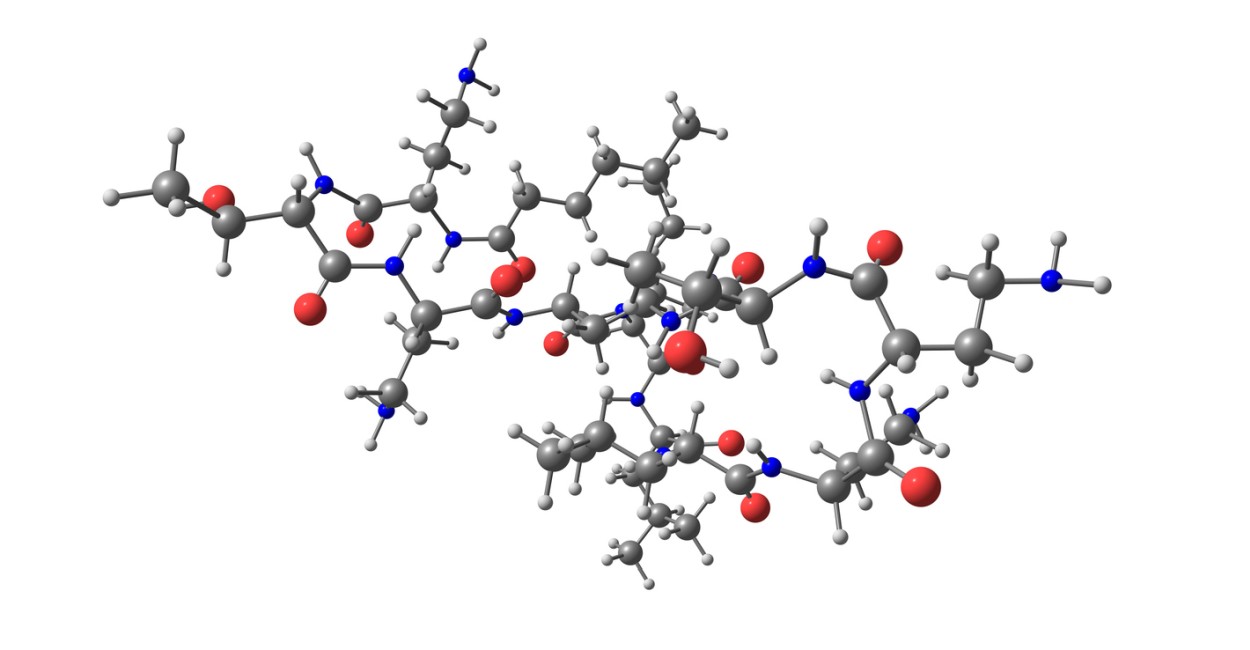
Sermorelin is typically termed a GHRH analog, while GHRP-6 and GHRP-2 are considered growth hormone secretagogues (GHSs). By interacting with two different molecules, these peptides appear to stimulate the release of growth hormone via distinct pathways, which may also be complementary and synergistic, based on the available scientific data.
Research
Sermorelin & GHRP-6 & GHRP-2 Blend Structure and General Properties
Sermorelin appears to be a synthetic 29-amino-acid peptide corresponding to the N-terminal segment of non-endogenously occurring GHRH, which is 44 amino acids in length.(1) Because Sermorelin reproduces the first 29 residues of the parent molecule, it is frequently described as the shortest fragment that appears to retain the receptor-binding portion of the larger peptide.
Sermorelin appears to be amidated at the C-terminus, which is generally thought to support the stability of such small peptides and their apparent affinity for the receptor. Rather than being fragments of an endogenous hormone, GHRP-6 and GHRP-2 appear to be short, synthetic hexapeptides that incorporate several non-endogenous amino acid residues. Based on research published by authors such as Sigalos et al., these GHSs are “short, ~6 amino acid peptides initially developed as opiate […] analogs.”(1) Yet, they completely lack opioid signaling potential and interact with the ghrelin receptors, aka GHS receptors.
A recurring structural theme in both peptides is the deliberate exposure to D-configuration amino acids and, in the case of GHRP-2, a non-standard aromatic residue at position two. Structure-oriented descriptions of GHRP-2 characterize the position-one D-Ala as contributing to N-terminal stability, the position-two D-2-naphthylalanine as an aromatic residue thought to be important for receptor engagement, and the C-terminal lysinamide as a charged, amidated terminus.(2)
These non-endogenous substitutions are generally hypothesized to make the hexapeptides more resistant to enzymatic breakdown than an equivalent sequence of standard amino acids, which may be one reason they have been used as defined tools in laboratory settings.
Sermorelin & GHRP-6 & GHRP-2 Blend and Different Pituitary Receptors Signaling
Sermorelin is understood to act at the growth hormone-releasing hormone receptor, which belongs to the family B group of G protein-coupled receptors. According to a review by Culhane et al., family B receptors may interact with hormones and peptides like Sermorelin via a “two-domain” model.(3) In this model, the peptide hormone’s C-terminus may bind to the cognate receptor’s N-terminal domain and the N-terminus may bind to the receptor’s juxtamembrane and transmembrane domains.
The review further explains that “such binding leads to conformational changes in the receptor’s cytoplasmic domain to [activate] a G protein to trigger a downstream signaling process.” The authors further suggest that the apparent ligand binding may cause conformational rearrangements, which may trigger downstream signaling cascades via G protein activation.
For a Gs-coupled receptor of this family, the typical downstream consequence generally includes the accumulation of the intracellular second messenger cyclic adenosine monophosphate. In contrast, the receptor associated with the hexapeptides GHRP-6 & GHRP-2 is considered to be the growth hormone secretagogue receptor, also referred to as GHSR1a or the ghrelin receptor.
A review by Yin et al. suggests it may be a heterotrimeric G protein-coupled receptor containing 366 amino acids with seven transmembrane domains.(4) Specifically, the researchers describe a signaling cascade that differs markedly from the Gs-cyclic AMP route generally associated with the Sermorelin receptor.
The authors state that upon binding with ligands such as GHSs, the ghrelin receptors are believed to undergo profound changes in the transmembrane α helices, which may alter the conformation of the intracellular loops and facilitate their interaction with G-proteins. They identify the calcium pathway as the best-characterized route, specifically noting that the peptide engagement should lead to a hallmark increase in Ca2+ ions.
According to the review, when a ligand such as Sermorelin binds to the GHSR1a receptor, it may trigger the dissociation of the Gαq/11 subunit, which in turn may stimulate phospholipase C (PLC). PLC then may cleave the membrane lipid PIP2 into IP3 and diacylglycerol (DAG). From there, IP3 binds to its receptor to release calcium stores from the endoplasmic reticulum, while DAG activates protein kinase C. This indicates that agonists like GHRP-6 and GHRP-2 likely operate through this PLC-driven calcium mobilization rather than the cyclic AMP (cAMP) accumulation typically seen in family B receptors.
Sermorelin & GHRP-6 & GHRP-2 Potential Simulatory Actions
Laboratory work in pituitary cell models suggests that Sermorelin exposure may raise growth hormone synthesis, though the reported magnitude varies. In a report by Vittone et al., mean 12-hour growth hormone concentrations appeared to rise roughly twofold, from about 1.1 plus or minus 0.9 µg/L to approximately 2.2 µg/L. In contrast, the cumulative 12-hour output appeared to climb from around 1,114 to about 2,032 µg·min/L.(5)
Using a slightly modified variant of Sermorelin, Khorram et al. commented that the GH peak seems concentrated in the first two hours of exposure, with the 2-hour integrated signal appearing to shift from roughly 200 to 300 up to about 1,100 to 1,600 µg·L⁻¹·min, which approaches a sixfold rise before later output settles to a lower amplitude.(6) The increase in growth hormone synthesis is also posited to induce downstream anabolic signaling, which may involve an increase in the levels of insulin-like growth hormone 1 (IGF-1). Based on the data, Sermorelin may have resulted in a 27-28% increase in IGF-1 production.
Work on GHRP-2 reported by Bowers et al. suggests that this hexapeptide may hold potential for sustained stimulation of pulsatile growth hormone secretion during continuous 30-day experimentation.(7) The authors also report that GHRP-2 stimulated pulsatile growth hormone secretion by 4- to 6-fold initially and remained elevated at more than 1.8-fold by days 14 and 30. Specifically, the total 24-hour increase was approximately from 20–40 µg·L⁻¹·24 h to roughly 110–150 µg·L⁻¹·24 h. Downstream anabolic signaling was also upregulated, and IGF-1 levels may have been upregulated from 90- 100 µg/L to approximately150- 1600 µg/L, which is approximately a 50–80% increase.
Research by Micic et al. investigated the potential of the other hexapeptide, GHRP-6, and apparently observed a rise in peak growth hormone from a basal level near 1 to 2 mU/L to around 60 mU/L.(8) This peak was noted as considerably larger than the typical response of pituitary cells to growth hormone-releasing hormone by roughly threefold.
Sermorelin & GHRP-6 & GHRP-2 Potential Synergism
Each of the hexapeptides appears to exert synergistic actions when combined with a GHRH analog. For example, the aforementioned research by Micic et al. also investigated the combined potential of GHRP-6 and a full-length GHRH analog.(8) According to the data, GHRP-6 alone was associated with a peak near 60 mU/L, while pairing GHRP-6 with full-length GHRH was reported to raise the peak to roughly 140 mU/L, which is about 7-fold higher than typical physiological peaks.
A similar experiment by Cordido et al also reported on the total growth hormone increase over 12-hour experimentation, and reported that there was an increase from roughly 260 mU·min/L with GHRP-6 alone and about 159 mU·min/L with the GHRH analog alone to approximately 729 mU·min/L for the combination.(9)
Comparable signals have been reported for GHRP-2 when paired with GHRH analogs. Specifically, in an analysis by Veldhuis and Keenan, the authors suggested that GHRH alone may upregulate growth hormone output up to about 40 μg/l/h.(10) At the same time, GHRP-2 alone was associated with about 90 μg/l/h. Notably, the combination of GHRP-2 with a GHRH analog apparently resulted in a growth hormone increase to about 110 μg/l/h.
The aforementioned experiment by Sigalos is the only one that has evaluated the potential of all three peptides in the Sermorelin & GHRP-6 & GHRP-2 blend with regard to their synergistic potential. Specifically, the authors focused on their potential for downstream anabolic signaling. According to their data, the Sermorelin & GHRP-6 & GHRP-2 blend led to an increase in IGF-1 levels from a mean baseline near 159.5 ng/mL to approximately 239.0 ng/mL. This is roughly a 50% increase over baseline anabolic signaling. Overall, it appears that each of the GHSs may have synergistic implications with GHRH analogs like sermorelin, and that the combination of the Sermorelin & GHRP-6 & GHRP-2 peptides may lead to significant anabolic actions that apparently outperform each of the peptides individually.
NOTE: These products are intended for laboratory research use only. This peptide is not intended for personal use. Please review and adhere to our Terms and Conditions before ordering.
References:
- Sigalos JT, Pastuszak AW, Allison A, Ohlander SJ, Herati A, Lindgren MC, Lipshultz LI. Growth Hormone Secretagogue Treatment in Hypogonadal Men Raises Serum Insulin-Like Growth Factor-1 Levels. Am J Mens Health. 2017;11(6):1752-1757. doi:10.1177/1557988317718662. PMID: 28830317. https://pmc.ncbi.nlm.nih.gov/articles/PMC5675260/
- GHRP-2, pralmorelin structural records. Reported sequence D-Ala-D-2-Nal-Ala-Trp-D-Phe-Lys-NH2, molecular formula C45H55N9O6. National Center for Biotechnology Information, PubChem. https://pubchem.ncbi.nlm.nih.gov/compound/9822028
- Culhane KJ, Liu Y, Cai Y, Yan EC. Transmembrane signal transduction by peptide hormones via family B G protein-coupled receptors. Front Pharmacol. 2015;6:264. doi:10.3389/fphar.2015.00264. PMID: 26594176. https://pmc.ncbi.nlm.nih.gov/articles/PMC4633518/
- Yin Y, Li Y, Zhang W. The growth hormone secretagogue receptor: its intracellular signaling and regulation. Int J Mol Sci. 2014;15(3):4837-4855. doi:10.3390/ijms15034837. PMID: 24651458. https://pmc.ncbi.nlm.nih.gov/articles/PMC3975427/
- Vittone J, Blackman MR, Busby-Whitehead J, Tsiao C, Stewart KJ, Tobin J, Stevens T, Bellantoni MF, Rogers MA, Baumann G, Roth J, Harman SM, Spencer RG. Effects of single nightly injections of growth hormone-releasing hormone (GHRH 1-29) in healthy elderly men. Metabolism. 1997 Jan;46(1):89-96. doi: 10.1016/s0026-0495(97)90174-8. PMID: 9005976.
- Khorram O, Laughlin GA, Yen SS. Endocrine and metabolic effects of long-term administration of [Nle27]growth hormone-releasing hormone-(1-29)-NH2 in age-advanced men and women. J Clin Endocrinol Metab. 1997 May;82(5):1472-9. doi: 10.1210/jcem.82.5.3943. PMID: 9141536.
- Bowers, C. Y., Granda, R., Mohan, S., Kuipers, J., Baylink, D., & Veldhuis, J. D. (2004). Sustained elevation of pulsatile growth hormone (GH) secretion and insulin-like growth factor I (IGF-I), IGF-binding protein-3 (IGFBP-3), and IGFBP-5 concentrations during 30-day continuous subcutaneous infusion of GH-releasing peptide-2 in older men and women. The Journal of clinical endocrinology and metabolism, 89(5), 2290–2300. https://doi.org/10.1210/jc.2003-031799
- Micic D, Popovic V, Kendereski A, Macut D, Casanueva FF, Dieguez C. Growth hormone secretion after the administration of GHRP-6 or GHRH combined with GHRP-6 does not decline in late adulthood. Clin Endocrinol (Oxf). 1995 Feb;42(2):191-4. doi: 10.1111/j.1365-2265.1995.tb01861.x. PMID: 7734029.
- Cordido F, Peñalva A, Diéguez C, Casanueva FF. Massive growth hormone (GH) discharge in obese subjects after the combined administration of GH-releasing hormone and GHRP-6: evidence for a marked somatotroph secretory capability in obesity. J Clin Endocrinol Metab. 1993 Apr;76(4):819-23. doi: 10.1210/jcem.76.4.8473389. PMID: 8473389.
- Veldhuis JD, Keenan DM. Secretagogues govern GH secretory-burst waveform and mass in healthy eugonadal and short-term hypogonadal men. Eur J Endocrinol. 2008 Nov;159(5):547-54. doi: 10.1530/EJE-08-0414. Epub 2008 Aug 14. Erratum in: Eur J Endocrinol. 2008 Dec;159(6):841. PMID: 18703567; PMCID: PMC2680123.