


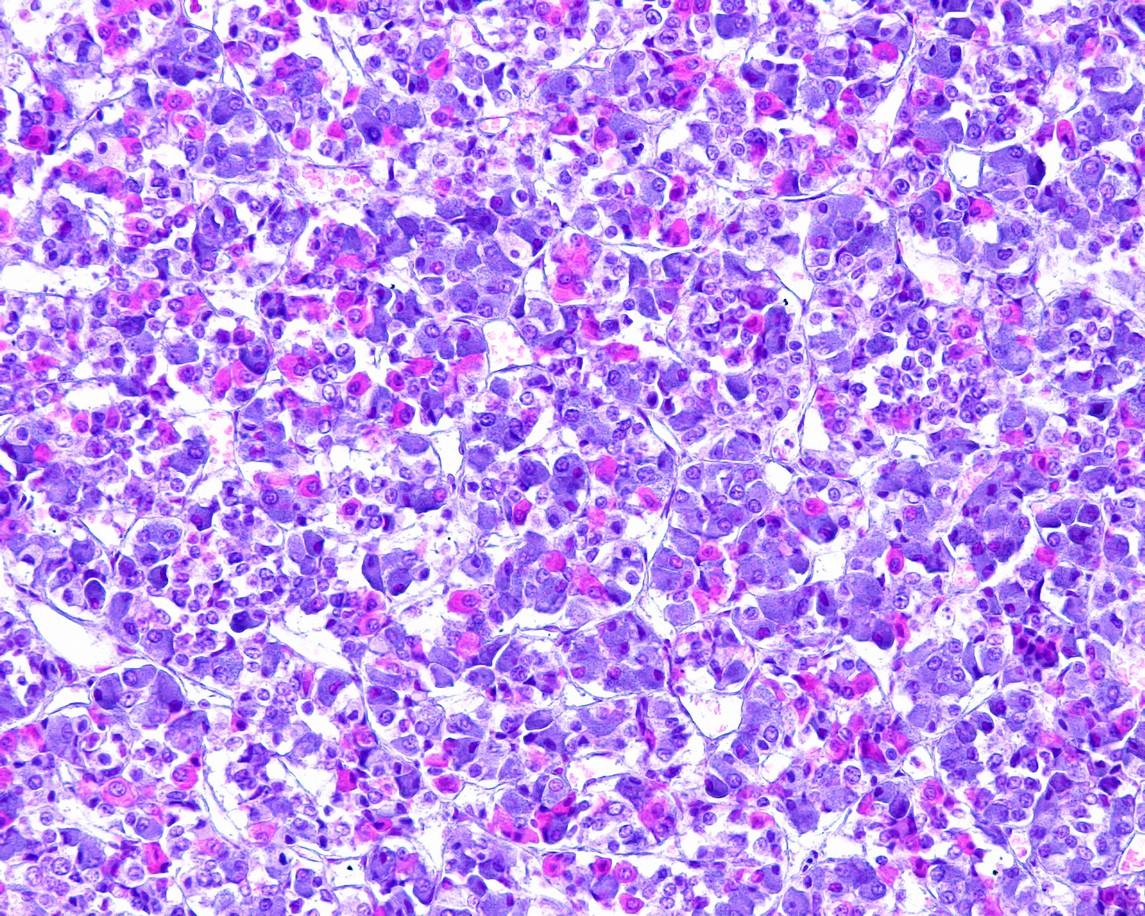
Several experiments suggest that while each of the two peptides may hold the potential to induce supraphysiological growth hormone release from these cells, the combination may exert an additional synergistic action. Below, we will outline their individual and combined potential based on laboratory data.
Research
Considerations to Combine Sermorelin & GHRP-6
Initially, some researchers posited that molecules such as Sermorelin and GHRP-6 blend may act on similar receptors such as the GHRH receptors, as they appear to both stimulate growth hormone release from pituitary cells. Researchers such as Bowers et al. suggest that during the 1990s, the hormone ghrelin was discovered, and then it was also discovered that it may act via a distinct set of receptors on pituitary cells, called GHS receptors.(1)
It appears that Sermorelin & GHRP-6 are peptides which belong to two distinct peptide classes. They may engage separate receptors but converge on the same target cell through different intracellular routes. Specifically, Sermorelin is thought to act at the classical GHRH receptor, which belongs to the family B group of G protein-coupled receptors. Researchers such as Culhane et al., who have delved into the mechanisms of these receptors, suggest that they may be associated with activation of adenylyl cyclase, a subsequent rise in intracellular cyclic AMP, and downstream activation of protein kinase.(2)
To achieve that activation, Sermorelin appears to have a structure that closely resembles the hormonally active part of GHRH. Specifically, the peptide consists of the first 29 amino acids of GHRH, and is amidated for stability at the C-terminus, leading to the formation of GHRH 1-29 NH₂. This is considered the shortest peptide that may stimulate the GHRH receptors. GHRP-6, by contrast, is thought to act at the growth hormone secretagogue receptor type 1a, which is coupled to Gq/11 proteins and to phospholipase C activity. According to publications by Yin et al., this second pathway is proposed to generate the messengers IP₃ and diacylglycerol, which may in turn mobilize intracellular calcium and activate protein kinase C.(3)
To achieve that activation, GHRP-6 is even shorter, and interestingly, it does not appear to resemble ghrelin. Instead, it is suggested to be developed from a completely different class of molecules called enkephalins, but via modifications, the affinity is changed from opioid to GHS receptors. Because the aforementioned two second-messenger systems appear to be distinct, researchers have hypothesized that studying the two peptide classes together rather than in isolation may help reveal how somatotroph cells integrate multiple simultaneous inputs.
Individual and Combined Anabolic Potential of Sermorelin & GHRP-6
Studies on pituitary cell populations indicate that Sermorelin administration may trigger increased capacity for growth hormone synthesis. Subsequent investigations by Khorram et al. using a structurally modified variant of Sermorelin suggested that the peptide induces an increase in hGH that increases six-fold from baseline within the first two hours.(4)
Later, the growth hormone levels decrease, but nevertheless, research by Vittone et al. suggests that 12-hour mean growth hormone concentrations are still elevated compared to baseline and appear to nearly double from approximately 1.1 ± 0.9 µg/L to around 2.2 ± 1.9 µg/L.(5) Moreover, the researchers commented that integrated 12-hour growth hormone output climbed from roughly 1,114 ± 931 to approximately 2,032 ± 1,728 µg·min/L.
Research on GHRP-6 by Micic et al. suggests that this GHS may elevate growth hormone synthesis from pituitary cells up to 60 mU/L, which is about threefold compared to typical physiological peaks of GH synthesis.(6) In addition to GHRP-6 alone, Micic et al. also evaluated full-length GHRH alone, and the two peptides combined across cell cultures. They reported that the combined administration of GHRH and GHRP-6 elicited a greater growth hormone increase than either full-length GHRH alone or GHRP-6 alone. Specifically, the combination condition apparently reached approximately 140 mU/L
Another trial by Cordido et al. also examined the potential of GHRP-6 in isolation, which apparently induced an average peak concentration of around 6 mU/L, while the full-length GHRH alone elicited approximately 2.6 mU/L.(7) However, blending both peptides yielded a peak of 16.3 mU/L, which was estimated as approximately 2.7 times the GHRP-6-only response and roughly 6.2 times that of the GHRH analog alone. Integrated 12-hour growth hormone output followed a similar pattern of approximately 260 mU·min/L with GHRP-6 alone, 159 mU·min/L with the GHRH analog alone, and 729 mU·min/L with the combination.
Most interestingly, one experiment by Sigalos et al. specifically examined a combination of Sermorelin and GHRP-6. Their findings suggest that this multi-peptide blend elevated growth hormone concentrations from a baseline of 160 ng/mL to approximately 250–265 ng/mL.(8) However, it is important to note that the blend in Sigalos et al.’s experiment also contained another GHRP-2.
Downstream Anabolic Signaling of Sermorelin & GHRP-6
Based on the previously mentioned research by Khorram et al., Sermorelin may also induce an increase in IGF-1, or insulin-like growth factor-1, which is widely regarded as a primary downstream effector of growth hormone’s anabolic signaling across various tissue types.(4) Through binding to growth hormone receptors on target cells, growth hormone is thought to stimulate local IGF-1 production by an approximately 27±8% elevation.
These researchers also posited that this increase in IGF-1 may be linked to “increases in lean [muscular tissue] mass, insulin sensitivity, general well-being,” and more. While other researchers have not investigated the potential support for GHRP-6 on IGF-1 synthesis, the experiment by Sigalos et al. suggests the blend (also including a second GHRP) may induce a massive anabolic potential “within 2 weeks, by increased serum levels of IGF-I” in mammalian research models. More specifically, the researchers commented on an apparently increased IGF-1 level from a mean baseline near 159.5 nanograms per milliliter to approximately 239.0 nanograms per milliliter.(8)
NOTE: These products are intended for laboratory research use only. This peptide is not intended for personal use. Please review and adhere to our Terms and Conditions before ordering.
References:
- Bowers CY. History of the discovery of ghrelin. Methods Enzymol. 2012;514:3-32. PMID: 22975043. https://doi.org/10.1016/B978-0-12-381272-8.00001-5
- Culhane KJ, Liu Y, Cai Y, Yan EC. Transmembrane signal transduction by peptide hormones via family B G protein-coupled receptors. Front Pharmacol. 2015 Nov 5;6:264. doi: 10.3389/fphar.2015.00264. PMID: 26594176; PMCID: PMC4633518.
- Yin Y, Li Y, Zhang W. The growth hormone secretagogue receptor: its intracellular signaling and regulation. Int J Mol Sci. 2014 Mar 19;15(3):4837-55. doi: 10.3390/ijms15034837. PMID: 24651458; PMCID: PMC3975427.
- Khorram O, Laughlin GA, Yen SS. Endocrine and metabolic effects of long-term administration of [Nle27]growth hormone-releasing hormone-(1-29)-NH2 in age-advanced men and women. J Clin Endocrinol Metab. 1997 May;82(5):1472-9. doi: 10.1210/jcem.82.5.3943. PMID: 9141536.
- Vittone J, Blackman MR, Busby-Whitehead J, Tsiao C, Stewart KJ, Tobin J, Stevens T, Bellantoni MF, Rogers MA, Baumann G, Roth J, Harman SM, Spencer RG. Effects of single nightly injections of growth hormone-releasing hormone (GHRH 1-29) in healthy elderly men. Metabolism. 1997 Jan;46(1):89-96. doi: 10.1016/s0026-0495(97)90174-8. PMID: 9005976.
- Micic D, Popovic V, Kendereski A, Macut D, Casanueva FF, Dieguez C. Growth hormone secretion after the administration of GHRP-6 or GHRH combined with GHRP-6 does not decline in late adulthood. Clin Endocrinol (Oxf). 1995 Feb;42(2):191-4. doi: 10.1111/j.1365-2265.1995.tb01861.x. PMID: 7734029.
- Cordido F, Peñalva A, Dieguez C, Casanueva FF. Massive growth hormone (GH) discharge in obese subjects after the combined administration of GH-releasing hormone and GHRP-6: evidence for a marked somatotroph secretory capability in obesity. J Clin Endocrinol Metab. 1993 Apr;76(4):819-23. doi: 10.1210/jcem.76.4.8473389. PMID: 8473389.
- Sigalos JT, Pastuszak AW, Allison A, Ohlander SJ, Herati A, Lindgren MC, Lipshultz LI. Growth Hormone Secretagogue Treatment in Hypogonadal Men Raises Serum Insulin-Like Growth Factor-1 Levels. Am J Mens Health. 2017 Nov;11(6):1752-1757. doi: 10.1177/1557988317718662. Epub 2017 Aug 22. PMID: 28830317; PMCID: PMC5675260.