


Latest Articles by Dr. Marinov

Tripeptide-1 (GHK Basic) Actions on Skin Cells and Underlying Connective Tissues
Tripeptide-1 is hypothesized to be a short-chain peptide composed of the amino acids glycine, histidine, and lysine, arranged in the sequence GHK. Scientists pioneering research on Tripeptide-1,...
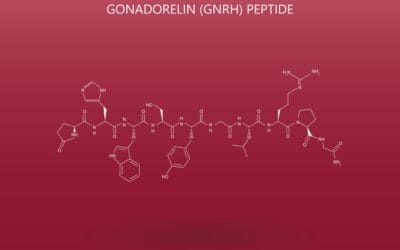
Gonadorelin’s Potential Interactions With The Hypothalamic-Pituitary-Gonadal Axis
Gonadorelin is a synthetic analogue that may potentially mimic the endogenously occurring gonadotropin-releasing hormone (GnRH). Also referred to as growth hormone-releasing factor (GHRF),...
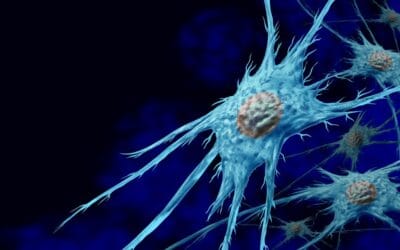
Lipopeptide (Biopeptide EL) Actions on Fibroblasts & Melanocytes
Lipopeptide (sometimes referred to as Biopeptide EL) is a blend that typically contains Glyceryl Polymethacrylate, PEG-8, and Palmitoyl Hexapeptide-12 (Pal-VGVAPG). While PEG-8 and Glyceryl...
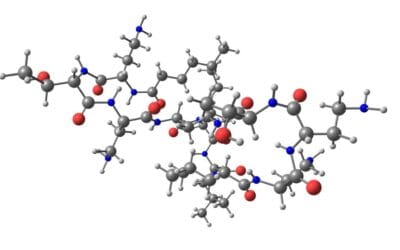
Frag 176-191 & Mod GRF 1-29 & Ipamorelin Blend Actions on Adipose Cells
Frag 176-191, Mod GRF 1-29, and Ipamorelin are peptides that researchers believe may impact the metabolism of fat cells through several different mechanisms. For example, Fragment 176-191 is...
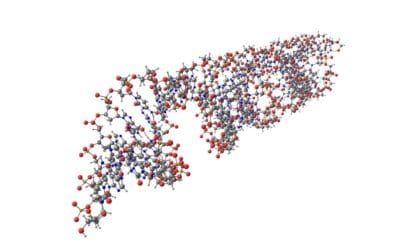
GHK Basic Potential on Oxidative Damage Mitigation and Recovery
Researchers think of GHK Basic as a small peptide made up of three amino acids—glycine, histidine, and lysine. Together, these form a tripeptide sequence that mimics the molecular structure of forms...
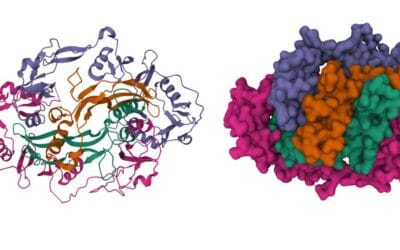
Anabolic and Proliferative Potential of FST-344
FST-344 is a recombinant form of an endogenous glycoprotein that exists in two major isoforms generated by alternative mRNA splicing: FST-317 and FST-344, containing 288 and 315 amino acids after...
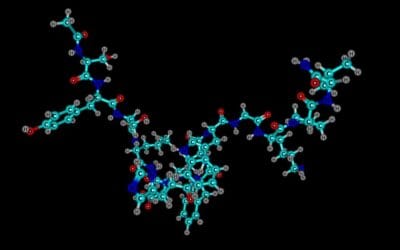
Melanotan II Interactions with Melanocortin Receptors
Melanotan II is a synthetic analog of the naturally occurring 13 amino acids of the alpha-melanocyte-stimulating hormone (α-MSH). While the peptide is based on α-MSH, it has important structural...

Examorelin (Hexarelin): Interactions With Neuroendocrine Signaling
Examorelin, also referred to as Hexarelin, P-23905, and MF-6003, is a research peptide that belongs to the group of growth hormone secretagogues (GHSs). That is because it works by activating the...

Emideltide (DSIP) Interactions with CNS Neurotransmitters
Emideltide, or Delta Sleep-Inducing Peptide (DSIP), is an endogenous peptide with nine amino acids. In relevant studies, the peptide was initially isolated from the central nervous system (CNS) of...