


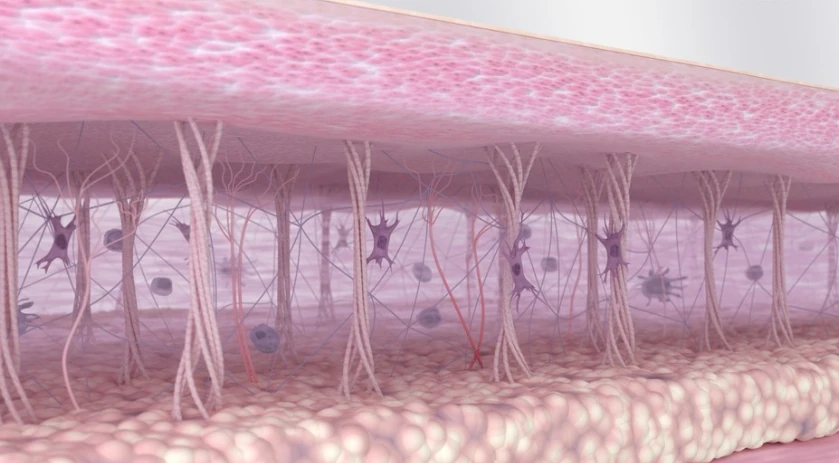
The KLOW Blend brings together four peptides, and each of them has been examined in laboratory models for its possible actions on inflammatory signaling, angiogenic signaling, and cellular repair-associated pathways.
Chemically, the four molecules have little in common. Still, despite this structural divergence, the available research data suggest that the four compounds may converge on a shared set of repair-associated processes while also approaching those processes from different directions. That combination of apparent overlap and apparent complementarity is the rationale that has been offered for grouping them as the KLOW Blend.
What Does Research Show About the KLOW Blend?
What Peptides Are in the KLOW Blend, and What Are Their Main Potential Properties?
The four peptides in the KLOW Blend are GHK-Cu, KPV, TB-500, and BPC-157. GHK-Cu appears to be a tripeptide with the sequence glycyl-histidyl-lysine, with an ion attachment presented by Cu²⁺. Maquart and colleagues proposed, on the basis of fibroblast culture experiments, that the GHK sequence may be liberated endogenously when collagen is broken down, potentially acting as a signal that repair is required.(1)
Moreover, this sequence appears to have a significant affinity towards copper ions and the presence of such an ion may be integral to its potential. GHK-Cu has been posited to interact with fibroblasts, immune cells, enzymes, ion channels, and cell-surface receptors, with reported downstream correlates at the level of gene expression. Consequently, it may hold potential for collagen formation, modulation of inflammatory signaling, and potential antioxidant behavior.
KPV is another tripeptide, which represents the lysine-proline-valine fragment at the C-terminus of α-MSH. Work reviewed by Böhm et al. raises the possibility that this small fragment may retain a share of the anti-inflammatory potential attributed to the full α-MSH molecule.(2) Proposed mechanisms include reduced NF-κB and MAP kinase signaling and interaction with nitric oxide (NO) signaling, which together might correspond to lower pro-inflammatory cytokine output in exposed cultures. TB-500 appears to be a synthetic sequence based on the endogenous peptide thymosin beta-4. Similarly to thymosin beta-4, TB-500 is posited to interact with cytoskeletal organization and inflammatory signaling.
A review by Maar et al. suggests that exposure of laboratory models to the peptide may coincide with altered cellular movement and structural reorganization, together with possible activity along angiogenic routes and in the regulation of inflammatory mediators.(3) BPC-157 appears to be a fifteen-amino-acid peptide pioneered by the team of Sikiric et al.(4) According to their publications, the peptide may engage with intracellular signaling systems relevant to vascular growth, alongside a potential lowering action on pro-inflammatory cascades.(4)
What Is the KLOW Blend’s Potential Role in Regulating Inflammatory Signaling?
All four peptides in the KLOW Blend have been studied in the context of modulating inflammatory signaling. The most researched one in this context is KPV. Research by Dalmasso et al. posits that the tripeptide may enter epithelial and immune cell cultures through the PepT1 transporter and suppress inflammatory signaling within the cells.(5) In epithelial cells stimulated with IL-1β, the peptide apparently slowed IκB-α degradation and narrowed the window of NF-κB activation. It also appeared to reduce IL-1β-driven phosphorylation of ERK1/2, JNK, and p38, which would point toward broad rather than selective reduction of MAP kinase (MAPK) signaling, and IL-8 output dropped in parallel. In immune cell cultures stimulated with TNF-α, IκB-α appeared unchanged while IL-8 messenger RNA was decreased.
GHK-Cu has also been examined in immune cell cultures, specifically macrophage cultures, which were activated by pro-inflammatory triggers. Namely, research by Park et al. suggests that exposure to the peptide apparently lowered the levels of intracellular reactive oxygen species and helped normalize superoxide dismutase activity.(6) GHK-Cu apparently also decreased the levels of TNF-α and IL-6 release, which were otherwise increased by the pro-inflammatory stimulus. The authors propose that the peptide may help regulate and reduce the activation of key upstream regulators, ultimately blunting NF-κB activation, and may aid the actions of KPV on inflammation inside the cell.
Research on TB-500 also suggests that the peptide may interact with inflammatory signaling, but via a different route which involves the so-called Toll-like receptors (TLRs). These receptors may help certain types of progenitor cells switch into immune cells under specific conditions. Research by Santra et al. suggests that the peptide may raise levels of miR-146a, a small regulatory RNA that has been described as an internal brake on TLR signaling.(7) Increasing miR-146a apparently led to a decrease in the signaling proteins IRAK1 and TRAF6, which may suppress the pro-inflammatory routes converging on NF-κB activation.
BPC-157 may complement the other three peptides by interacting with the inflammatory signaling in between cells. Research by Sikiric et al. suggests that the peptide may reduce infiltration of inflammatory cells in laboratory models.(8) Specifically, BPC-157 is described as a peptide that may “interact with the NO-system, providing endothelium protection,” which may indirectly limit inflammatory amplification by keeping microvascular structure intact.
What Is the KLOW Blend’s Potential Role in Angiogenesis?
Three of the four KLOW Blend peptides (all except KPV) have also been studied in the context of new blood vessel formation, which is also a key step of regeneration processes in laboratory models of recovery. Particularly TB-500 appears to support cellular movement and has attracted the most direct attention for its angiogenesis potential. Research by Lv et al. suggests that the peptide may shape cell movement by binding globular actin (G-actin) and adjusting how actin filaments assemble, possibly rendering cells more capable of changing shape, migrating, and organizing into multicellular arrangements.(9)
Motility of that kind is a baseline requirement for sprouting angiogenesis, in which vascular cells must advance into hypoxic regions and assemble into new tubes. The authors apparently observed that the peptide raised cell viability and migration and increased tube formation on matrices, a standard laboratory proxy for angiogenic behavior, alongside apparently elevated expression of VEGFA, angiopoietin-2 (Ang2), and the Tie2 receptor.
GHK-Cu may also support VEGF based on the research of Mulder et al., who apparently observed upregulation of VEGF along with increased endothelial cell proliferation, migration, and tube formation.(10) The presence of copper may also act as a cofactor for several angiogenic enzymes and transcriptional programs, and the GHK sequence appears to deliver copper in a biologically functional form at sites of cellular injury, thus giving the GHK-Cu peptide a unique angiogenic potential.
Work by Hsieh et al. also points out that BPC-157 may also directly engage with VEGF signaling and may prompt activation of VEGF receptor 2 (VEGFR2) in the apparent absence of added VEGF, together with internalization of the receptor and downstream signaling through the VEGFR2–Akt–eNOS axis.(11) The investigators also describe apparent upregulation of VEGFR2 expression itself, which they connect to Egr-1-associated transcriptional activity, and posit increased endothelial migration and tube formation in exposed cell cultures.
What Is the KLOW Blend’s Potential Role in Collagen Synthesis?
All four peptides in the KLOW Blend may support the synthesis of collagen and other extracellular matrix (ECM) proteins in the context of cellular repair and regeneration. As previously mentioned, GHK-Cu may act as a collagen breakdown signal, and thus it is considered to play a collagen-stimulating role in the blend.(1) Further research by Fu et al. suggests that the peptide may act as a stimulus to collagen synthesizing cells in different tissues, such as bone cells and tendon cells.(12) Their experiment suggested that exposure of bone and tendon cells to the peptide may have resulted in better tendon cell growth around bone cells possibly via improved collagen deposition at the junction between two differently organized cell matrices.
While GHK-Cu may stimulate the volume of collagen synthesis, other peptides in this blend, such as TB-500, may contribute by aiding the arrangement of the collagen fibers properly. Research by Xu et al. studied models of recovering ligament and tendon fibroblasts and suggests that collagen fibers appeared more uniformly aligned along the ligament axis and more evenly spaced in TB-500-exposed cultures than in unexposed controls.(13) The experiment also involved electron microscopy which reportedly indicated larger collagen fibril diameters in TB-500 exposed cell culture. This is an observation conventionally associated with better-supported mechanical behavior, and these structural observations apparently coincided with greater measured tensile strength and stiffness.
Chang et al. report similar observations in BPC-157 experiments, specifically describing quickened migration and spreading in cell cultures of tendon fibroblasts. These are considered prerequisites for repopulating an injury site alongside supporting better fibroblast survival under oxidative stress.(14) At the cellular level the authors link these outcomes to increased actin fiber formation, noting that “F-actin formation as detected by FITC-phalloidin staining was induced in BPC 157-exposed cells.” Activation of focal adhesion signaling through phosphorylation of FAK and paxillin has additionally been posited to assist attachment and movement within the matrix.
As mentioned, Dalmasso et al. suggest that KPV apparently curbs NF-κB and MAPK signaling and lowers pro-inflammatory cytokine release, and this has been posited to potentially help establish conditions under which fibroblast activity and matrix deposition proceed with less inflammatory interference.(5)
What Is the KLOW Blend’s Potential Role in Cellular Regeneration?
The aforementioned mechanisms regarding inflammatory signaling, angiogenesis and collagen synthesis may all converge on positive support for cellular repair and regeneration processes, where the four KLOW Blend peptides may complement each other. For example, research by Sikiric et al. suggests that BPC-157 may be associated with Egr-1 together with its regulator NAB2, and with FAK–paxillin signaling implicated in adhesion and migration.(15) It has additionally been associated with apparently normalized NO signaling under both excessive and suppressed NO states, offsetting the consequences of NOS blockade in one direction and NO overproduction in the other. Since NO is posited to govern vasodilation, endothelial survival, and angiogenic signaling, such balancing might further support nutrient delivery to injured cellular structures and permit endothelial activation and remodeling to continue.
KPV has been examined with a similar emphasis on NO by the research of Bonfiglio et al., who examined research models featuring mechanically induced epithelial abrasions and report that models exposed to the tripeptide achieved complete structural regeneration within 60 hours. In contrast, unexposed controls did not reach full closure within the same window.(16) The reparative pattern was apparently abolished when an inhibitor of nitric oxide synthase was introduced, which the authors read as evidence that NO may mediate these potential actions.
Because cell migration is a prerequisite for repopulating a site of injury, the actin-binding character attributed to TB-500 has also been discussed in a regeneration context rather than a strictly vascular one.(3)(9) The peptide’s apparent action on filament assembly has been posited to render some cell types more mobile, which may bear on how quickly cultures reorganize after disruption. GHK-Cu has also been suggested to possess downstream correlations spanning collagen-related genes, antioxidant enzymes, and inflammatory mediators with a role in cellular regeneration.(1)(6)
NOTE: These products are intended for laboratory research use only. This peptide is not intended for personal use. Please review and adhere to our Terms and Conditions before ordering.
References:
- Maquart FX, Pickart L, Laurent M, Gillery P, Monboisse JC, Borel JP. Stimulation of collagen synthesis in fibroblast cultures by the tripeptide-copper complex glycyl-L-histidyl-L-lysine-Cu2+. FEBS Lett. 1988 Oct 10;238(2):343-6. doi: 10.1016/0014-5793(88)80509-x. PMID: 3169264.
- Böhm M, Luger TA, Tobin DJ, García-Borrón JC. Melanocortin receptor ligands: new horizons for skin biology and clinical dermatology. J Invest Dermatol. 2006 Sep;126(9):1966-75. doi: 10.1038/sj.jid.5700421. PMID: 16912693.
- Maar K, Hetenyi R, Maar S, Faskerti G, Hanna D, Lippai B, Takatsy A, Bock-Marquette I. Utilizing Developmentally Essential Secreted Peptides Such as Thymosin Beta-4 to Remind the Adult Organs of Their Embryonic State-New Directions in Anti-Aging Regenerative Therapies. Cells. 2021;10(6):1343. doi: 10.3390/cells10061343.
- Seiwerth S, Milavic M, Vukojevic J, Gojkovic S, Krezic I, Vuletic LB, Pavlov KH, Petrovic A, Sikiric S, Vranes H, Prtoric A, Zizek H, Durasin T, Dobric I, Staresinic M, Strbe S, Knezevic M, Sola M, Kokot A, Sever M, Lovric E, Skrtic A, Blagaic AB, Sikiric P. Stable Gastric Pentadecapeptide BPC 157 and Wound Healing. Front Pharmacol. 2021 Jun 29;12:627533. doi: 10.3389/fphar.2021.627533. PMID: 34267654; PMCID: PMC8275860.
- Dalmasso G, Charrier-Hisamuddin L, Nguyen HTT, Yan Y, Sitaraman S, Merlin D. PepT1-Mediated Tripeptide KPV Uptake Reduces Intestinal Inflammation. Gastroenterology. 2008 Jan;134(1):166-178. doi: 10.1053/j.gastro.2007.10.026. PMID: 18061177; PMCID: PMC2431115.
- Park JR, Lee H, Kim SI, Yang SR. The tripeptide GHK-Cu complex ameliorates lipopolysaccharide-induced acute lung injury in mice. Oncotarget. 2016 Sep 6;7(36):58405-58417. doi: 10.18632/oncotarget.11168. PMID: 27517151; PMCID: PMC5295439.
- Santra M, Zhang ZG, Yang J, Santra S, Santra S, Chopp M, Morris DC. Thymosin β4 up-regulation of microRNA-146a promotes oligodendrocyte differentiation and suppression of the Toll-like proinflammatory pathway. J Biol Chem. 2014 Jul 11;289(28):19508-18. doi: 10.1074/jbc.M113.529966. PMID: 24828499; PMCID: PMC4094061.
- Sikiric P, Seiwerth S, Rucman R, Turkovic B, Rokotov DS, Brcic L, Sever M, Klicek R, Radic B, Drmic D, Ilic S, Kolenc D, Stambolija V, Zoricic Z, Vrcic H, Sebecic B. Focus on ulcerative colitis: stable gastric pentadecapeptide BPC 157. Curr Med Chem. 2012;19(1):126-32. doi: 10.2174/092986712803414015. PMID: 22300085.
- Lv S, Cai H, Xu Y, Dai J, Rong X, Zheng L. Thymosin-β4 induces angiogenesis in critical limb ischemia mice via regulating Notch/NF-κB pathway. Int J Mol Med. 2020 Oct;46(4):1347-1358. doi: 10.3892/ijmm.2020.4701. PMID: 32945357; PMCID: PMC7447324.
- Mulder GD, Patt LM, Sanders L, Rosenstock J, Altman MI, Hanley ME, Duncan GW. Enhanced healing of ulcers in patients with diabetes by topical treatment with glycyl-L-histidyl-L-lysine copper. Wound Repair Regen. 1994 Oct;2(4):259-69. doi: 10.1046/j.1524-475X.1994.20406.x. PMID: 17147644.
- Hsieh MJ, Liu HT, Wang CN, Huang HY, Lin Y, Ko YS, Wang JS, Chang VH, Pang JS. Therapeutic potential of pro-angiogenic BPC157 is associated with VEGFR2 activation and up-regulation. J Mol Med (Berl). 2017 Mar;95(3):323-333. doi: 10.1007/s00109-016-1488-y. Epub 2016 Nov 15. PMID: 27847966.
- Fu SC, Cheuk YC, Chiu WY, Yung SH, Rolf CG, Chan KM. Tripeptide-copper complex GHK-Cu (II) transiently improved healing outcome in a rat model of ACL reconstruction. J Orthop Res. 2015 Jul;33(7):1024-33. doi: 10.1002/jor.22831. PMID: 25731775.
- Xu B, Yang M, Li Z, Zhang Y, Jiang Z, Guan S, Jiang D. Thymosin β4 enhances the healing of medial collateral ligament injury in rats. Regul Pept. 2013 Jun 10;184:1-5. doi: 10.1016/j.regpep.2013.03.026. PMID: 23523891.
- Chang CH, Tsai WC, Lin MS, Hsu YH, Pang JH. The promoting effect of pentadecapeptide BPC 157 on tendon healing involves tendon outgrowth, cell survival, and cell migration. J Appl Physiol (1985). 2011 Mar;110(3):774-80. doi: 10.1152/japplphysiol.00945.2010. PMID: 21030672.
- Sikiric P, Seiwerth S, Rucman R, Kolenc D, Vuletic LB, Drmic D, Grgic T, Strbe S, Zukanovic G, Crvenkovic D, Madzarac G, Rukavina I, Sucic M, Baric M, Starcevic N, Krstonijevic Z, Bencic ML, Filipcic I, Rokotov DS, Vlainic J. Brain-gut Axis and Pentadecapeptide BPC 157: Theoretical and Practical Implications. Curr Neuropharmacol. 2016;14(8):857-865. doi: 10.2174/1570159×13666160502153022. PMID: 27138887; PMCID: PMC5333585.
- Bonfiglio V, Camillieri G, Avitabile T, Leggio GM, Drago F. Effects of the COOH-terminal tripeptide alpha-MSH(11-13) on corneal epithelial wound healing: role of nitric oxide. Exp Eye Res. 2006 Dec;83(6):1366-72. doi: 10.1016/j.exer.2006.07.014. PMID: 16965771.