Thymogen appears to be a synthetic dipeptide composed of the two amino acids L-glutamine and L-tryptophan (Glu-Trp). It was originally identified by a team of researchers led by Khavinson et al., and thus it is considered to be one of Khavinson’s peptides.(1) The...
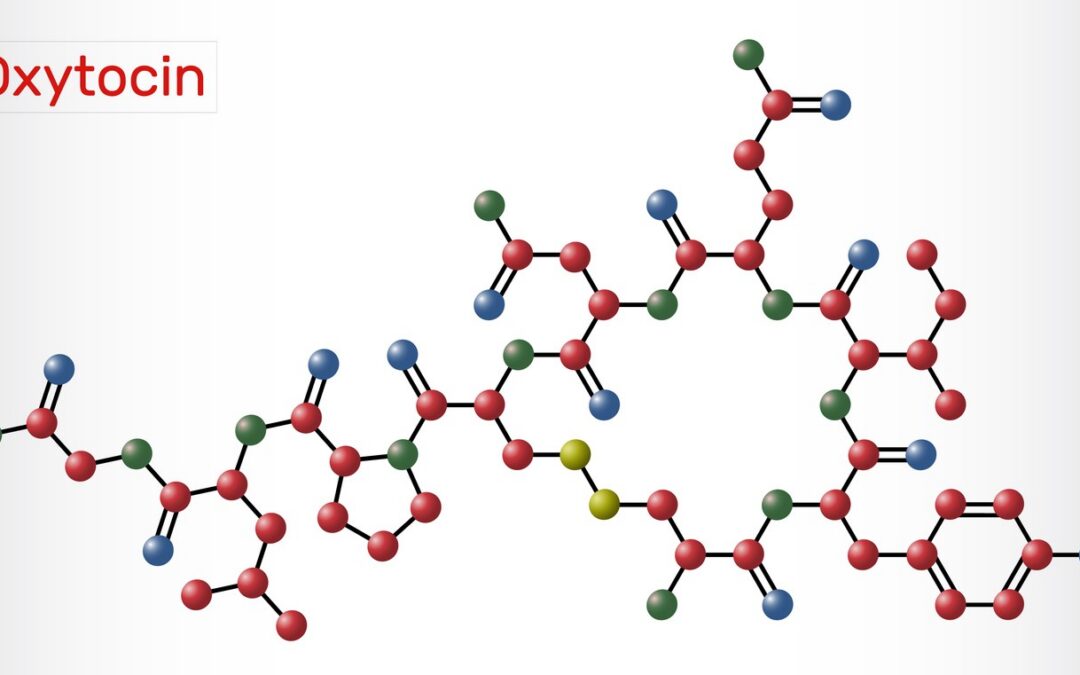
Oxytocin is posited to be a cyclic nonapeptide composed of nine amino acids in the sequence Cys–Tyr–Ile–Gln–Asn–Cys–Pro–Leu–Gly-NH2 (CYIQNCPLG-NH2), with a molecular weight of approximately 1007 Da. Structurally, it appears to consist of a six-residue ring stabilized...
Kisspeptin 45-54 is posited to be a synthetic, 10–amino acid research peptide that is also referred to as kisspeptin 10. It may correspond to residues 45–54 of the parent kisspeptin precursor, and its sequence appears to be Tyr-Asn-Trp-Asn-Ser-Phe-Gly-Leu-Arg-Phe-NH2....
T-31 is posited to be a synthetic, three–amino acid research peptide consisting of the sequence Ala-Glu-Asp (AED), and is also sometimes referred to in the literature as Cartalax. Structurally, it appears to belong to the family of so-called Khavinson’s short...
PNC-27 is posited to be a synthetic, 32–amino acid research peptide composed of two main segments. Specifically, its N-terminus appears to be made of a p53-derived HDM-2–binding sequence which represents the 12-26th residue of p53. On the other hand, its C-terminal...
Tesamorelin is considered to be a synthetic analog of growth hormone-releasing hormone (GHRH), designed to activate GHRH receptors in pituitary gland cells. The peptide consists of the full 44-amino-acid sequence matching endogenous GHRH but includes key modifications...