


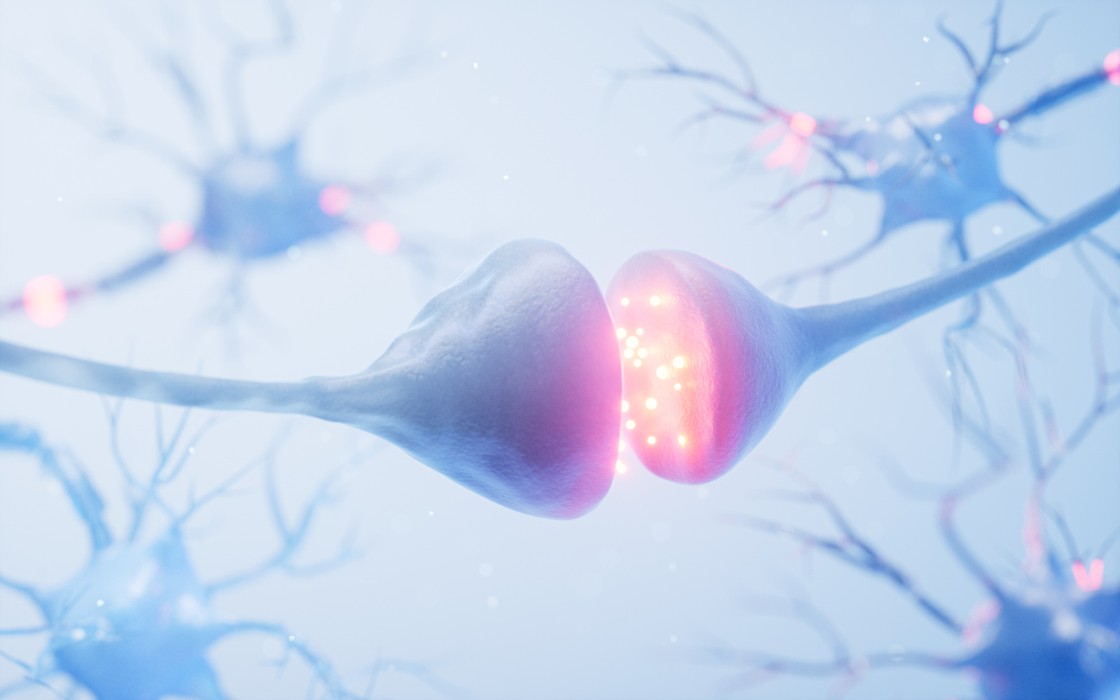
Despite that Sermorelin has a structure containing only the first 29 amino acids of endogenous GHRH, this peptide appears sufficient to also fully activate the GHRH receptors and possibly induce hGH synthesis from anterior pituitary cells. In addition, the Sermorelin apparently has an amidated C-terminal end, which is posited to support the stability of the molecule.(1) In this article, we will break down the structure of Sermorelin and the mechanisms via which this peptide may interact with pituitary cells in laboratory experiments, specifically regarding hGH synthesis.
Research
Sermorelin Interactions with Pituitary Cells
Sermorelin may activate the growth hormone–releasing hormone receptors in pituitary-derived cell systems by binding the receptor’s extracellular domain and stabilizing an active receptor shape that favors coupling to Gαs. Research by Halmos et al. suggests that Gαs is one type of G protein, which is posited to act as a membrane-associated molecular switch that may relay GHRH receptor activation to important intracellular enzymes.(2)
When Gαs is engaged, adenylyl cyclase may increase cyclic AMP (cAMP), which in turn is a small second messenger that may spread the signal inside pituitary cells. Consequently, cAMP may then activate the protein kinase A (PKA) enzyme that apparently transfers phosphate groups onto target proteins and triggers their activation.
In pituitary cell models such as those by Takei et al., this signaling appears to connect to secretion of hGH by shaping membrane excitability and calcium entry.(3) Experimental work has reported that GHRH receptor stimulation may activate nonselective cation conductances that depolarize the plasma membrane, which would be expected to favor opening of voltage-gated Ca²⁺ channels. Ca²⁺ then acts as a proximal trigger for regulated exocytosis, so the receptor-driven rise in cAMP may work in parallel with Ca²⁺-dependent release machinery.
Sermorelin Potential on hGH Synthesis
Research by Vittone et al. confirms that when exposed to Sermorelin, the peptide interacts with the GHRH receptors on pituitary cells to induce hGH synthesis, which the researchers monitored over a 12-hour window after exposure.(4) Within this period, the researchers apparently observed that the hGH secretion by the cells increased from about 1.1 to 2.2 μg/L, which is roughly a twofold rise. The integrated output, reported as the area under hGH peaks, increased from about 1,114 to 2,032 μg·min/L. The main detectable change apparently was a greater total release rather than a consistent increase in peak height. The increase in hGH output by the pituitary cells was apparently confined to roughly the first two hours after initiating the Sermorelin experiment.
In another experiment conducted in laboratory settings by Khorram et al., the researchers also observed that Sermorelin exposure leads to an upregulation of hGH synthesis by pituitary cells that is confined to the first two hours before returning toward baseline.(5) Importantly, outside this induced burst, spontaneous pulsatility appeared largely intact, with no clear shift in overall pulse frequency or amplitude, implying that the main action was the added, receptor-driven pulse rather than a full reshaping of the background pattern. While the researchers observed similar 2-fold increases over 12 hours of monitoring, they also suggested that in the first 2 hours, the area under hGH peaks increased from 200-300 μg·min/L up to 1100-1300 μg·min/L. Over repeated evaluation, the researchers did not notice any signs of desensitization.
Because hGH may act as an upstream driver of anabolic mediators, the authors also tracked its main anabolic mediator, IGF-1, and apparently found that IGF-1 increased with relative rises of roughly 27-28%. This pattern is consistent with the idea that repeated receptor-driven hGH pulses may upregulate IGF-1 as a downstream anabolic signal, even if the coupling between hGH AUC and IGF-1 change is not perfectly tight in every individual research model. Hence, other researchers such as Culhane et al. have commented that Sermorelin potentially “accelerates growth and increases pituitary GH content.”(6)
Sermorelin Potential on Testosterone Synthesis
In laboratory settings studied by Chatelain et al., upregulation of IGF-1 by peptides such as Sermorelin may extend beyond pituitary signaling and short hGH bursts. It might potentially support steroidogenic cell populations whose primary endocrine output is testosterone.(7) The paper posits that IGF-1 upregulation may prime Leydig-cell–rich testicular preparations for a stronger acute response to an hCG challenge. In turn, hCG binds to the same sites as Luteinizing hormone (LH), which is considered the main mediator that triggers testosterone release from these cells.
In line with this, the researchers apparently observed that the number of LH/hCG binding sites in testicular cell membranes increased. When expressed per gram of cellular mass, hCG binding increased from about 2.5 to about 5.6 fmol/g after exposure to elevated IGF-1 levels. Moreover, when the scientists stimulated the system with hCG, there was an increase in the acute steroidogenic output as observed by the authors. The hCG-stimulated testosterone readout increased from about 7.9 ng/mL in control cell cultures to about 25.2 ng/mL after the increased IGF-1 exposure. This suggests that by upregulating IGF-1, peptides like Sermorelin may support the capacity of testicular steroidogenic cells to respond when the LH/hCG receptor pathway is activated. The authors also posited that Sermorelin and other peptides that may elevate IGF-1 may also be “able to induce the maturation of Leydig cell function and that the effects of hGH on the testis are probably mediated by IGF-I.”
NOTE: These products are intended for laboratory research use only. This peptide is not intended for personal use. Please review and adhere to our Terms and Conditions before ordering.
References:
- Clark RG, Robinson IC. Growth induced by pulsatile infusion of an amidated fragment of human growth hormone releasing factor in normal and GHRF-deficient rats. Nature. 1985 Mar 21-27;314(6008):281-3. PMID: 2858818.https://doi.org/10.1038/314281a0
- Halmos G, Szabo Z, Dobos N, Juhasz E, Schally AV. Growth hormone-releasing hormone receptor (GHRH-R) and its signaling. Rev Endocr Metab Disord. 2025 Jun;26(3):343-352. doi: 10.1007/s11154-025-09952-x. Epub 2025 Feb 12. PMID: 39934495; PMCID: PMC12137518.
- Takei T, Yasufuku-Takano J, Takano K, Fujita T, Yamashita N. Effect of Ca2+ and cAMP on capacitance-measured hormone secretion in human GH-secreting adenoma cells. Am J Physiol. 1998 Oct;275(4):E649-54. doi: 10.1152/ajpendo.1998.275.4.E649. PMID: 9755084.
- Vittone J, Blackman MR, Busby-Whitehead J, Tsiao C, Stewart KJ, Tobin J, Stevens T, Bellantoni MF, Rogers MA, Baumann G, Roth J, Harman SM, Spencer RG. Effects of single nightly injections of growth hormone-releasing hormone (GHRH 1-29) in healthy elderly men. Metabolism. 1997 Jan;46(1):89-96. doi: 10.1016/s0026-0495(97)90174-8. PMID: 9005976.
- Khorram O, Laughlin GA, Yen SS. Endocrine and metabolic effects of long-term administration of [Nle27]growth hormone-releasing hormone-(1-29)-NH2 in age-advanced men and women. J Clin Endocrinol Metab. 1997 May;82(5):1472-9. doi: 10.1210/jcem.82.5.3943. PMID: 9141536.
- Culhane KJ, Liu Y, Cai Y, Yan EC. Transmembrane signal transduction by peptide hormones via family B G protein-coupled receptors. Front Pharmacol. 2015 Nov 5;6:264. doi: 10.3389/fphar.2015.00264. PMID: 26594176; PMCID: PMC4633518.
- Chatelain PG, Sanchez P, Saez JM. Growth hormone and insulin-like growth factor I treatment increase testicular luteinizing hormone receptors and steroidogenic responsiveness of growth hormone deficient dwarf mice. Endocrinology. 1991 Apr;128(4):1857-62. doi: 10.1210/endo-128-4-1857. PMID: 2004605.