


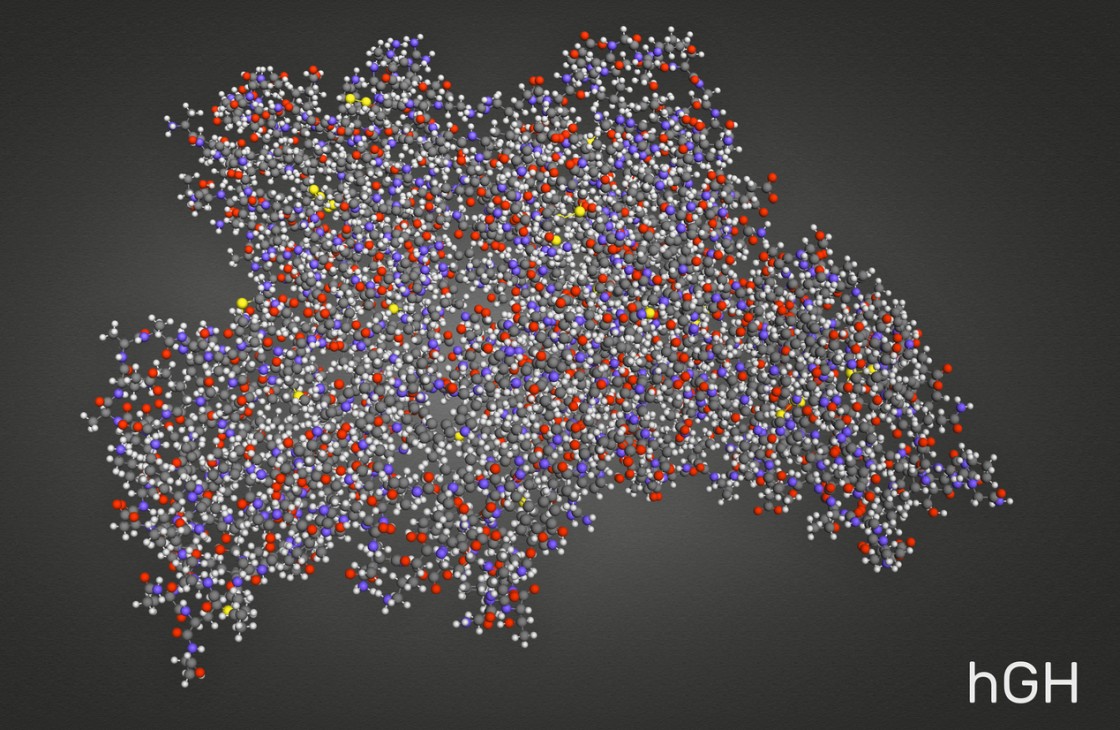
As these peptides are posited to act at different entry points in the same endocrine cells, researchers have considered investigating whether a parallel receptor activation may change the pattern, amplitude, or timing of growth hormone secretion in controlled assays. Previous experiments also suggest that simultaneous signaling through GHS-R1a and the GHRH receptor is sometimes reported to produce a larger or differently shaped secretory response than either input alone, which may be relevant for mapping how these pathways converge inside somatotrophs.
Research
Sermorelin & GHRP-2 Interactions with GHRH Receptors
While both peptides appear to interact with pituitary cells, only Sermorelin appears to do so via the GHRH receptors, as it mirrors the first 29 amino acids of endogenous growth hormone–releasing hormone (GHRH). In fact, researchers such as Clark et al. considered it to be the shortest GHRH-like fragment that may still engage the GHRH receptor, which is a class B G-protein-coupled receptor expressed on somatotroph pituitary cells.(1) Because the receptor recognizes a specific three-dimensional presentation within the first 29–amino acid sequence, Sermorelin is considered sufficient to maintain the contact points needed for binding and activation, while omitting the remainder of the endogenous 44-amino acid GHRH sequence.
To support the stability of the shorter sequence, Sermorelin appears to be C-terminally amidated. This may reduce susceptibility to some peptidases and may help the peptide retain a preferred conformation in solution. After binding to the GHRH receptor, Sermorelin may bias signaling toward a Gs-driven response, with activation of adenylyl cyclase, a rise in intracellular cyclic AMP, and downstream activation of protein kinase A.
In pituitary cell models, the cascade results in hGH output typically. Across published exposure experiments, the apparent magnitude of growth hormone output depends strongly on the sampling window. Notably, Vittone et al. apparently observed that mean 12-hour growth hormone concentrations rose by about twofold, from roughly 1.1 ± 0.9 µg/L to about 2.2 ± 1.9 µg/L, and that the 12-hour integrated output increased similarly, from around 1,114 ± 931 to roughly 2,032 ± 1,728 µg·min/L.(2)
Further, Khorram et al. have described similar changes within the first 12 hours, but also suggest that such longer sampling windows may blend early peaks with later, smaller outputs and yield a smaller overall fold-change.(3) Using a modified Sermorelin-like molecule, the scientists suggested that the peak hGH synthesis actually occurs within a much shorter 2-hour window. Within this 2-hour window, the researchers commented that the growth hormone signal may have experienced an approximate five- to sixfold rise as the levels shifted from roughly 200–300 to about 1,100–1,600 µg·L⁻¹·min.
The research by Khorram et al. also suggests that these short peaks may be sufficient to induce a downstream upregulation in IGF-1 production in responsive tissues or cell systems exposed to growth hormone.(3) Specifically, they commented that Sermorelin-driven increases in growth hormone may have been sufficient to shift IGF-1 upward by 27–28% in their setting. As IGF-1 is considered the main anabolic mediator of hGH, the researchers also posited that this may be linked to “increases in lean [muscular tissue] mass, insulin sensitivity, general well-being, and [mammalian mating drive].”
Sermorelin & GHRP-2 Interactions with GHS-R1a
While Sermorelin’s potential is limited to GHRH receptors, GHRP-2 appears to be an agonist of the growth hormone secretagogue receptor 1a (GHS-R1a), also referred to as the receptor system associated with the endogenous hormone ghrelin. Despite lacking sequence homology with ghrelin, GHRP-2 has been reported to behave as a functional GHS-R1a activator across multiple experimental designs, including a notable publication by Yin et al. Their publication breaks down the potential mechanisms via which the peptide may activate these receptors, primarily revolving around a signaling pattern consistent with Gq/11-linked activation of phospholipase C (PLC).(4)
According to their research, PLC is believed to cleave the membrane lipid PIP2 into IP3 and DAG. DAG appears to be linked to the activation of protein kinase C (PKC), which may modulate the secretory dynamics and cellular programs tied to hormone production. Consequently, IP3 may mobilize Ca2+ from intracellular stores, raising cytosolic Ca2+ levels in somatotroph cells and thereby supporting exocytosis of preformed growth hormone granules, ultimately leading to hGH release from the cells.
Several publications by Bowers et al. suggest that indeed, GHRP-2 may have potential for stimulating hGH release from pituitary cells.(5)(6) Notably, their publications suggest that during 24-hour lab experimentation, growth hormone may have increased approximately 20–30 µg·L⁻¹·24 h in placebo conditions to roughly 120–180 µg·L⁻¹·24 h with GHRP-2 exposure, consistent with an estimated 4- to 6-fold rise.
The same experiment apparently provided sufficient exposure to raise IGF-1 levels as well. Specifically, Bowers et al. reported IGF-1 increased by 50–80%. Moreover, Bowers et al. also noted that the addition of a GHRH-agonist during the GHRP-2 evaluation may provide additional potency, and hypothesized that “combined GHRP-2 and GHRH drive [may be] more effective than either agonist alone” (5)
Sermorelin & GHRP-2 and Synergistic Potential
As suggested by Bowers et al., combining a GHRH-receptor agonist with GHRP-2 may be framed as a practical way to evaluate dual-receptor drive in somatotroph cells, with the possibility that simultaneous activation produces an output that exceeds either peptide when evaluated alone.
The mechanistic rationale is that GHRH-receptor activation is typically linked to cAMP/PKA signaling. In contrast, GHS-R1a activation by GHRP-2 is often linked to PLC-dependent pathways that raise intracellular Ca2+ and engage PKC. If these pathways converge on shared steps in the secretory machinery, the net action may appear synergistic.
A limitation in the literature is that all synergy experiments pair GHRP-2 with full-length, endogenous GHRH rather than Sermorelin. Even so, these datasets are still informative for assay design because Sermorelin is often relevant as a GHRH-like agonist in pituitary experiments, which has identical receptor targeting and mechanisms.
Data collected for an extra increment with dual stimulation is described in work such as Veldhuis et al., where each stimulus alone produced a large rise in growth hormone burst output, and the combined condition still increased the response further.(7) In the model described by Veldhuis et al., GHRH alone was estimated to raise burst hGH output by pituitary cells by roughly 20-fold above baseline.
GHRP-2 alone was associated with an even larger rise of around 47-fold. When both were present, the calculated response increased to about 54-fold above the baseline, which is compatible with a modest gain over GHRP-2 alone, and suggests that receptor co-activation may shift secretory dynamics beyond what is achieved by triggering a single pathway.
NOTE: These products are intended for laboratory research use only. This peptide is not intended for personal use. Please review and adhere to our Terms and Conditions before ordering.
References:
- Clark RG, Robinson IC. Growth induced by pulsatile infusion of an amidated fragment of hGH-releasing factor in normal and GHRF-deficient rats. Nature. 1985 Mar 21-27;314(6008):281-3. doi: 10.1038/314281a0. PMID: 2858818.
- Vittone J, Blackman MR, Busby-Whitehead J, Tsiao C, Stewart KJ, Tobin J, Stevens T, Bellantoni MF, Rogers MA, Baumann G, Roth J, Harman SM, Spencer RG. Effects of single nightly injections of growth hormone-releasing hormone (GHRH 1-29) in healthy elderly men. Metabolism. 1997 Jan;46(1):89-96. doi: 10.1016/s0026-0495(97)90174-8. PMID: 9005976.
- Khorram O, Laughlin GA, Yen SS. Endocrine and metabolic effects of long-term administration of [Nle27]growth hormone-releasing hormone-(1-29)-NH2 in age-advanced men and women. J Clin Endocrinol Metab. 1997 May;82(5):1472-9. doi: 10.1210/jcem.82.5.3943. PMID: 9141536.
- Yin Y, Li Y, Zhang W. The growth hormone secretagogue receptor: its intracellular signaling and regulation. Int J Mol Sci. 2014 Mar 19;15(3):4837-55. doi: 10.3390/ijms15034837. PMID: 24651458; PMCID: PMC3975427.
- Bowers CY. History of the discovery of ghrelin. Methods Enzymol. 2012;514:3-32. PMID: 22975043. https://doi.org/10.1016/B978-0-12-381272-8.00001-5
- Bowers, C. Y., Granda, R., Mohan, S., Kuipers, J., Baylink, D., & Veldhuis, J. D. (2004). Sustained elevation of pulsatile growth hormone (GH) secretion and insulin-like growth factor I (IGF-I), IGF-binding protein-3 (IGFBP-3), and IGFBP-5 concentrations during 30-day continuous subcutaneous infusion of GH-releasing peptide-2 in older men and women. The Journal of clinical endocrinology and metabolism, 89(5), 2290–2300. https://doi.org/10.1210/jc.2003-031799
- Veldhuis JD, Keenan DM. Secretagogues govern GH secretory-burst waveform and mass in healthy eugonadal and short-term hypogonadal men. Eur J Endocrinol. 2008 Nov;159(5):547-54. doi: 10.1530/EJE-08-0414. Epub 2008 Aug 14. Erratum in: Eur J Endocrinol. 2008 Dec;159(6):841. PMID: 18703567; PMCID: PMC2680123.