


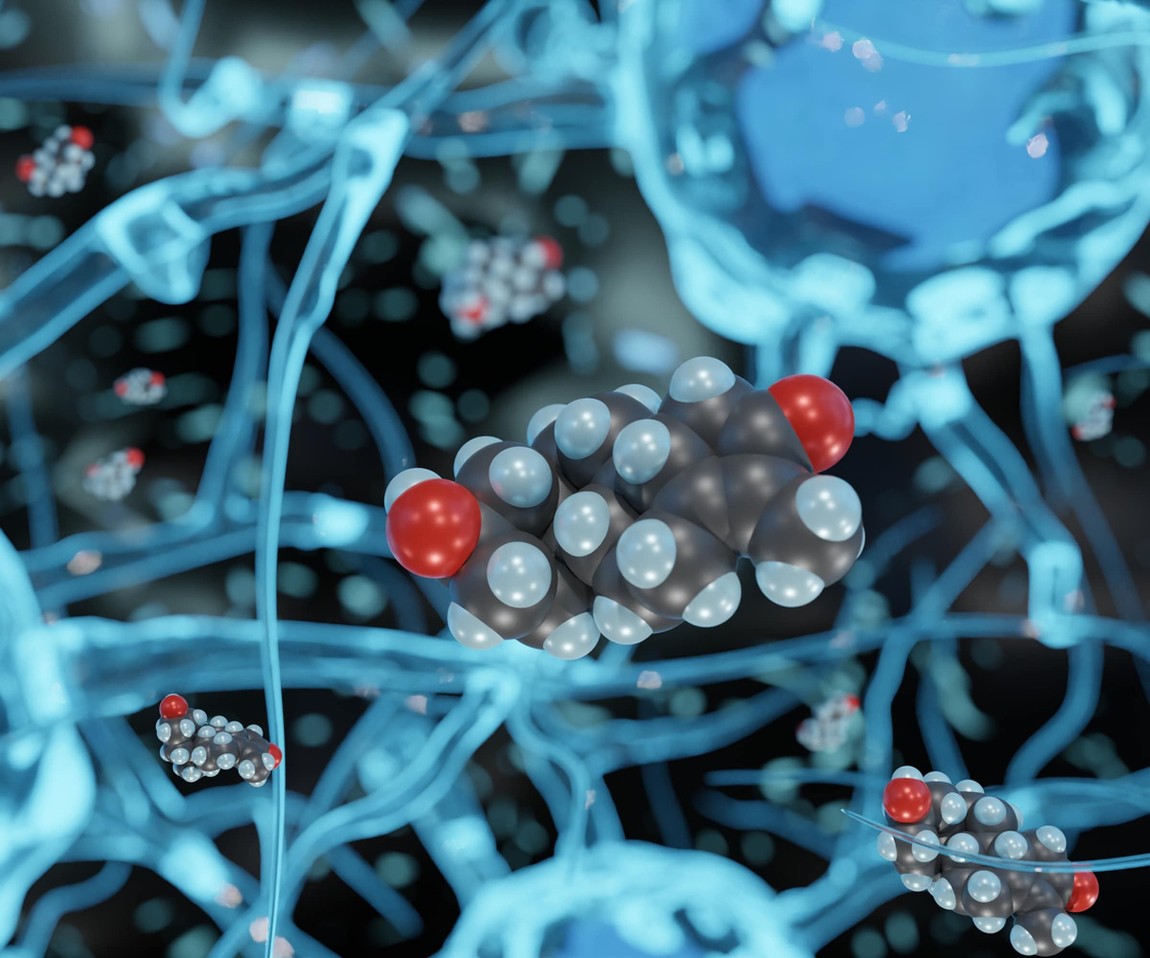
CJC-1295 is considered to be a stabilized analog related to the endogenous GHRH that engages the classical GHRH receptor on anterior pituitary somatotroph cells. Therefore, it is usually classified as a GHRH analog. On the other hand, Ipamorelin (Aib-His-D-2-Nal-D-Phe-Lys-NH2) is typically classified as a growth-hormone secretagogue (GHS) acting at the ghrelin/secretagogue receptor in the same cells.
Because these targets are distinct, co-exposure to both peptides is hypothesized to produce complementary actions in the target cells. Specifically, this diversity in mechanisms might alter both the amplitude and timing of GH output compared with either peptide alone, and combined experimentation might limit receptor-specific desensitization. Direct data showcasing such synergy remains scarce, so more experiments are needed for careful evaluation of cell-culture models in controlled laboratory settings.
Research
CJC-1295 & Ipamorelin Interaction with GHRH Signaling
Researchers posit that the CJC-1295 & Ipamorelin might engage somatotroph cells through parallel receptors observed in laboratory settings, with the CJC-1295 targeting GHRH-receptor signaling. According to Jette et al., CJC-1295 may achieve that as it appears to be based on the core motif of the endogenous GHRH.(1)
Specifically, this is the N-terminal GHRH(1–29) motif, which is the main motif mediating the GHRH-receptor affinity. The structure of the peptide has 3 amino acid modifications to potentially extend peptide stability and keep a bioactive conformation for more consistent GHRH-receptor engagement in laboratory settings. This may limit oxidation and maintain hydrophobic packing.
Furthermore, the peptide appears to have a C-terminal lysine bearing an Nε-3-maleimidopropionic acid moiety, also referred to as a drug-affinity complex or “DAC”. DAC is believed to tether the peptide to albumin in the media, which may increase exposure time in cell culture and further reduce proteolysis, potentially changing the timing and duration of GHRH-receptor binding.
Researchers such as Culhane et al. have posited that as CJC-1295 engages with the receptor, it typically activates the so-called cAMP pathway (adenylyl cyclase → cAMP → PKA), which may support GH gene activity and prepare secretory vesicles.(2) Because CJC-1295 appears to associate with albumin in the media via its DAC group, a small amount of free peptide may be released over time in culture. The researchers posit that this might keep the cAMP signal going longer than other GHRH analogs.
CJC-1295 & Ipamorelin Interaction with Ghrelin Signaling
The additional ghrelin signaling, mediated by the presence of Ipamorelin, may augment the already mentioned mechanisms by CJC-1295. Ipamorelin achieves that signaling despite not bearing any resemblance to the structure of endogenous ghrelin. Instead, researchers such as Raun et al. describe it as a pentapeptide with a structure based on the structure of earlier GHRPs and containing several synthetic D-form amino acids.(3)
GHRPs are posited to be derived from endogenous enkephalins, but do not appear to possess opiate signaling. Instead, they appear to interact with different pituitary cell receptors, and the unique structural characteristics of Ipamorelin appear to allow it to highly selectively interact with ghrelin receptors alone.
The researchers highlighted in their paper that “Ipamorelin did not release ACTH or cortisol in levels significantly different from those observed following GHRH stimulation,” which contrasts previous GHRPs that interact with several pituitary cell receptors.(3) Specifically, the ghrelin receptors engaged by Ipamorelin are also called the growth hormone secretagogue receptor type 1a (GHS-R1a).
Further research by Yin et al. suggests that upon binding selectively to GHS-R1a, Ipamorelin may couple with Gq/11 proteins, leading to phospholipase C (PLC) activation.(4) PLC may cleave membrane PIP₂ into other signaling molecules, such as inositol-1,4,5-trisphosphate (IP₃) and diacylglycerol (DAG).
Consequently, IP₃ is posited to mobilize Ca²⁺ from intracellular stores, while DAG may activate protein kinase C (PKC). The concurrent rise in cytosolic Ca²⁺ and PKC activity may facilitate exocytosis of GH-containing granules from these cells. In addition to the release of GH from pituitary cells, researchers suggest that Ipamorelin may also interact with ghrelin receptors in other parts of the nervous system, such as nerve cells that play a role in hunger hormone signaling.
This interaction may lead to upregulated hunger hormone signals, as observed by scientists such as Lall et al., who have observed over a 15% increase in size and weight in laboratory models.(5) The researchers suggest that this increase in size and weight is due to upregulated hunger hormone signaling.
CJC-1295 & Ipamorelin Anabolism in Different Cells
The CJC-1295 & Ipamorelin appear to reliably interact with different receptors on pituitary cells and upregulate GH synthesis. This may create GH-rich conditioned media for downstream, GH-responsive cells, with different studies suggesting potential anabolic responsiveness from muscle and bone cells. In particular, studies in research models exposed to Ipamorelin, such as the experiments of Johansen et al., suggest that the peptide may upregulate the bone mineral content (BMC) in bone cell samples, which may reflect an unregulated anabolic environment and better-supported tissue development.(6) These researchers commented “that the increases in cortical and total BMC were due to an increased growth of the bones with increased bone dimensions.”
Research with CJC-1295 without DAC also suggests that this peptide may lead to a substantial increase in muscular tissue mass. According to a publication by Khorram et al., 16 days of evaluation were sufficient to induce a more than 2% increase in lean muscle cell mass.(7) At the same time, researchers reported no significant changes in the size or mass of fat cells, suggesting that while Ipamorelin may upregulate hunger hormone signaling, CJC-1295 has a more focused potential for anabolic signaling.
CJC-1295 & Ipamorelin Synergism
Because CJC-1295 and ipamorelin may engage distinct receptors on somatotroph cells, a plausible synergistic action may be hypothesized in the context of laboratory experiments. Individually, scientific reports such as that by Teichman et al. suggest that CJC-1295 may elevate GH production from pituitary cells within ~2 hours and sustain higher baselines for >140 hours, on the order of around 2–10× above baseline levels.(8) Separately, researchers such as Gobburu et al. have observed that Ipamorelin may provoke acute GH surges that may reach ~26.6 ng/mL, which is around 2–5× above commonly cited peak physiological ranges.(9)
While direct data on the specific CJC-1295 & Ipamorelin combination are limited, research by Veldhuis et al. has suggested that pairing a GHRH analog similar to CJC-1295 with a GHS similar to Ipamorelin may have increased GH output to ~54-fold over saline, versus ~20-fold for the GHRH analog alone and ~47-fold for the GHS alone.(10) Drawing from this data as reference, it may be suggested that CJC-1295 & Ipamorelin combined exposure may further support pituitary output by an additional 10–15% compared to the potential of each peptide alone.
NOTE: These products are intended for laboratory research use only. This peptide is not intended for personal use. Please review and adhere to our Terms and Conditions before ordering.
References:
- Jetté L, Léger R, Thibaudeau K, Benquet C, Robitaille M, Pellerin I, Paradis V, van Wyk P, Pham K, Bridon DP. Human growth hormone-releasing factor (hGRF)1-29-albumin bioconjugates activate the GRF receptor on the anterior pituitary in rats: identification of CJC-1295 as a long-lasting GRF analog. Endocrinology. 2005 Jul;146(7):3052-8. doi: 10.1210/en.2004-1286. Epub 2005 Apr 7. PMID: 15817669.
- Culhane KJ, Liu Y, Cai Y, Yan EC. Transmembrane signal transduction by peptide hormones via family B G protein-coupled receptors. Front Pharmacol. 2015 Nov 5;6:264. doi: 10.3389/fphar.2015.00264. PMID: 26594176; PMCID: PMC4633518.
- Raun K, Hansen BS, Johansen NL, Thøgersen H, Madsen K, Ankersen M, Andersen PH. Ipamorelin, the first selective growth hormone secretagogue. Eur J Endocrinol. 1998 Nov;139(5):552-61. doi: 10.1530/eje.0.1390552. PMID: 9849822.
- Yin Y, Li Y, Zhang W. The growth hormone secretagogue receptor: its intracellular signaling and regulation. Int J Mol Sci. 2014 Mar 19;15(3):4837-55. doi: 10.3390/ijms15034837. PMID: 24651458; PMCID: PMC3975427.
- Lall, S., Tung, L. Y., Ohlsson, C., Jansson, J. O., & Dickson, S. L. (2001). Growth hormone (GH)-independent stimulation of adiposity by GH secretagogues. Biochemical and biophysical research communications, 280(1), 132–138. https://doi.org/10.1006/bbrc.2000.4065
- Johansen PB, Nowak J, Skjaerbaek C, Flyvbjerg A, Andreassen TT, Wilken M, Orskov H. Ipamorelin, a new growth-hormone-releasing peptide, induces longitudinal bone growth in rats. Growth Horm IGF Res. 1999 Apr;9(2):106-13. doi: 10.1054/ghir.1999.9998. PMID: 10373343.
- Khorram, O., Laughlin, G. A., & Yen, S. S. (1997). Endocrine and metabolic effects of long-term administration of [Nle27]growth hormone-releasing hormone-(1-29)-NH2 in age-advanced men and women. The Journal of clinical endocrinology and metabolism, 82(5), 1472–1479. https://doi.org/10.1210/jcem.82.5.3943
- Teichman SL, Neale A, Lawrence B, Gagnon C, Castaigne JP, Frohman LA. Prolonged stimulation of growth hormone (GH) and insulin-like growth factor I secretion by CJC-1295, a long-acting analog of GH-releasing hormone, in healthy adults. J Clin Endocrinol Metab. 2006 Mar;91(3):799-805. doi: 10.1210/jc.2005-1536. Epub 2005 Dec 13. PMID: 16352683.
- Gobburu, J. V., Agersø, H., Jusko, W. J., & Ynddal, L. (1999). Pharmacokinetic-pharmacodynamic modeling of ipamorelin, a growth hormone releasing peptide, in human volunteers. Pharmaceutical research, 16(9), 1412–1416. https://doi.org/10.1023/a:1018955126402
- Veldhuis JD, Keenan DM. Secretagogues govern GH secretory-burst waveform and mass in healthy eugonadal and short-term hypogonadal men. Eur J Endocrinol. 2008 Nov;159(5):547-54. doi: 10.1530/EJE-08-0414. Epub 2008 Aug 14. Erratum in: Eur J Endocrinol. 2008 Dec;159(6):841. PMID: 18703567; PMCID: PMC2680123.